A brief history of public auctions.
Far from being a simple commercial mechanism, auctions are a means of producing, recognising and circulating heritage. They are part of a complex operational chain involving scientific expertise and legal supervision.
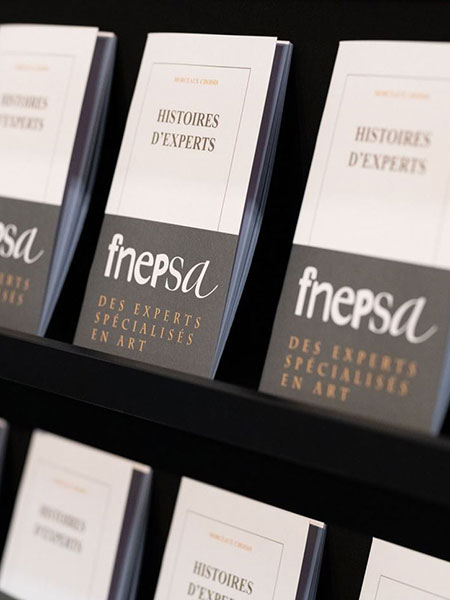
Expertise: the first step in heritage preservation Before any auction, each item is identified and contextualised by qualified experts who are members of a federation.
• attribution to a house or workshop,
• stylistic and technical dating,
• analysis of materials and processes,
• provenance research.
The epistemological approach to the item transforms a private asset into a documented entity. In the field of clothing, which is considered ephemeral, this step is crucial and contributes to the recognition of textiles as historical documents in their own right.
Expertise is a form of intangible conservation: it establishes knowledge, places the object in a genealogy and removes it from anonymity.
In France, voluntary sales are regulated by the Conseil des ventes volontaires (Voluntary Sales Council), which guarantees regulatory compliance, transparency and professional responsibility.Public sales thus become a regulated space, limiting the risk of clandestine dispersal.
Far from being a simple commercial mechanism, auctions are a means of producing, recognising and circulating heritage. They are part of a complex operational chain involving scientific expertise and legal supervision.In France, voluntary sales are regulated by the Conseil des ventes volontaires (Voluntary Sales Council), which guarantees regulatory compliance, transparency and professional responsibility.
Public sales thus become a regulated space, limiting the risk of clandestine dispersal. Auctions contribute to the social construction of value.
The reappearance on the market of a defunct fashion house or marginalised designer can lead to:
• a historiographical rediscovery,
a critical re-examination of established hierarchies,
• reintegration into public or private collections.
Institutions such as the Palais Galliera, Musée des Arts Décoratifs, MET, FIT, Victoria Albert Museum, Tokyo Institute... and collectors closely follow these sales, which provide a privileged observatory.
Contrary to a fixed approach to heritage, conservation does not mean immobility. Public sales organise the controlled circulation of goods.
The market then becomes a vehicle for material survival, particularly for textile objects, which are vulnerable by nature.
Sales catalogues are a valuable source of information.
They provide:
• technical descriptions,
• stylistic analyses,
• archival references,
• high-definition photographs.
These documents form a corpus that can be used by researchers, curators and fashion historians. Auctions thus contribute to a parallel archival system that complements public institutions.
Auctions combine
• expert knowledge,
• legal legitimacy,
• symbolic construction of value,
• controlled circulation,
• documentary production.
In the field of clothing and many other goods where the object has long remained marginal in the heritage hierarchy, auctions contribute to the recognition of fashion as cultural heritage in its own right.
Apologies to auction houses not mentioned and to experts.
Marine Lecamus
* Required fields

75001 Paris
France